
What Are the Signs of Moisture in Your Crawl Space?

Key Takeaway
Warning signs of crawl space moisture often appear gradually, making them easy to overlook until serious structural damage has already begun.
Common indicators include musty odors, wood rot, sagging floors, and visible mold growth beneath your home.
Western PA's freeze-thaw cycles and heavy clay soils create unique conditions that accelerate moisture problems in older homes.
Early detection and professional waterproofing can prevent costly foundation damage and protect your home's long-term value.

If your floors feel soft in spots, your home smells musty even after cleaning, or you have noticed discoloration on the joists visible through a floor register, your crawl space may be silently collecting moisture. Many homeowners in Irwin and surrounding communities never think about the crawl space until a problem becomes impossible to ignore, and by then, the damage can extend well beyond the crawl space itself.
Excess moisture beneath your home can compromise floor joists, encourage mold growth, and even undermine your foundation over time. The good news is that identifying these warning signs early gives you options before the repair scope expands significantly. If you are already seeing red flags, exploring professional Basement Waterproofing solutions is a smart first step toward protecting your home in North Huntingdon, PA.
What Crawl Space Moisture Looks Like in Western PA Homes
Moisture problems beneath Western PA homes tend to follow a predictable pattern, though the pace of damage varies by home age and construction. The earliest sign is almost always a persistent musty or earthy odor that migrates into the living areas above, often mistaken for a general dampness in the house.
Beyond the smell, homeowners commonly notice condensation on pipes and the underside of the subfloor, white chalky deposits called efflorescence on concrete walls, and standing water after heavy rain. Older block foundation homes throughout Westmoreland and Allegheny Counties are particularly vulnerable because many were built with clay soil backfill and no drainage tile, leaving them with few defenses against groundwater intrusion.
A Closer Look at the Most Common Warning Signs
Several specific signs point directly to a moisture problem beneath your home. Understanding each one helps you assess the urgency.
Sagging or soft floors: When wood subfloor framing absorbs moisture repeatedly, it swells, weakens, and eventually begins to sag. This is one of the most advanced signs and often means wood rot has already set in.
Visible mold or mildew: Black, green, or white mold growth on joists or insulation indicates sustained high humidity, not just a one-time event.
Rust on metal components: Rust on support posts, fasteners, or HVAC components inside the crawl space points to chronic moisture exposure.
Pest activity: Termites and carpenter ants are drawn to damp wood. A sudden pest problem may actually be a moisture problem in disguise.
Condensation on surfaces: When warm, humid air meets cooler surfaces in an unventilated crawl space, condensation forms, feeding the cycle of moisture damage.
If you are seeing multiple items on this list, the situation calls for a professional assessment rather than a wait-and-see approach. Reading about The Process of Basement Waterproofing: What to Expect can give you a clearer picture of what professional intervention actually involves.
How Western PA Winters Make the Problem Worse
The Pittsburgh region's climate adds a layer of complexity that homeowners in milder areas never face. Freeze-thaw cycles through Westmoreland County put repeated stress on foundation walls every winter. When water in the surrounding soil freezes, it expands and exerts lateral pressure on foundation walls. When it thaws, that pressure releases, and the cycle repeats.
Over several winters, this movement can crack foundation walls and create new entry points for water. Homes where foundation footings were installed above the 36-inch frost line required by Pittsburgh-area building code are especially prone to heave damage, which can displace entire sections of a wall. A crack in the foundation is not just a moisture problem; it is a structural one that often calls for foundation crack repair alongside waterproofing. That is why Foundation Repair and waterproofing often need to be addressed together rather than independently.
When to Stop Monitoring and Start Calling a Professional
Some homeowners try to manage crawl space dampness with ventilation fans or store-bought dehumidifiers. Those tools can reduce humidity in mild cases, but they do not address the source of the intrusion. If moisture is entering through the foundation walls, floor penetrations, or rising through bare soil, surface-level fixes will only delay the inevitable.
You should contact a professional when you notice any of the following: standing water that returns after each rain event, wood rot on any structural framing member, foundation cracks wider than a hairline, or humidity levels in the crawl space that stay persistently high. In cases where drainage is a contributing factor, sump pump installation may also be part of the solution. The longer a wet crawl space is left untreated, the higher the remediation cost. Reviewing the Cost of Basement Flood Damage Repair in Greensburg PA gives a useful baseline for understanding how costs can escalate when moisture damage is left unaddressed.
For additional guidance on managing water intrusion across your home, Sump Pump Maintenance Tips for Western Pennsylvania Homeowners and Basement Dehumidifier vs Waterproofing: Which Solves Moisture Problems? are both worth reading before deciding on a course of action.
What Makes A Better Choice, Inc. the Right Choice in North Huntingdon, PA
Serving Western Pennsylvania homeowners since 1996, A Better Choice, Inc. has spent decades diagnosing and resolving the moisture and foundation problems specific to this region's older housing stock and challenging soils. Our team understands the block foundations common to Monroeville and Greensburg neighborhoods, the drainage challenges in low-lying areas near creek beds, and the way freeze-thaw cycles accelerate foundation movement across Westmoreland County.
We do not offer one-size-fits-all solutions. Every inspection starts with understanding your specific home, your crawl space conditions, and the source of the intrusion before recommending a path forward. That approach has earned the trust of homeowners across North Huntingdon, Irwin, Murrysville, and beyond.
People Also Ask
How do I know if my crawl space has a moisture problem?
The most common signs are a persistent musty smell, visible mold on joists or insulation, standing water after rain, condensation on pipes, and soft or sagging floors above the crawl space. Rust on metal supports and pest activity are also reliable indicators that humidity levels in the space are too high.
What causes moisture in a crawl space?
Moisture typically enters through bare soil on the crawl space floor, through cracks or gaps in foundation walls, or through inadequate ventilation that allows humid outdoor air to condense inside. In Western PA, heavy clay soils and poor drainage compound the problem by holding groundwater against the foundation.
Is crawl space moisture dangerous to my health?
Yes, sustained crawl space moisture promotes mold and mildew growth, and because air moves upward through a home, mold spores from the crawl space can circulate into your living areas. Long-term mold exposure can cause respiratory irritation, allergic reactions, and other health concerns for sensitive individuals.
How much does crawl space waterproofing cost?
Costs vary significantly based on the size of the crawl space, the source and severity of the moisture problem, and whether structural repairs are also needed. Getting a professional on-site assessment is the most reliable way to understand what your specific situation requires and what the investment will look like.
FAQ
Can I waterproof my crawl space myself?
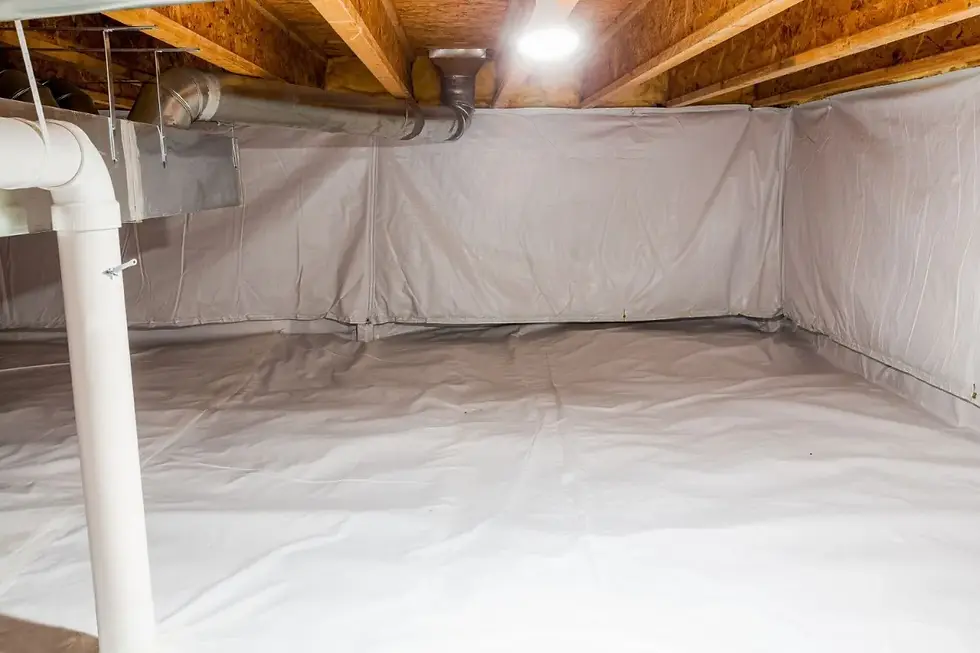
Homeowners can install plastic vapor barriers over exposed soil, which helps reduce moisture rising from the ground. However, this does not address water entering through foundation walls or poor drainage around the home. A professional assessment ensures the actual source of the intrusion is identified and corrected.
How long does crawl space waterproofing take?
Most crawl space waterproofing projects can be completed in one to two days depending on the extent of the work, the size of the space, and whether drainage systems or encapsulation are involved. Your contractor can give you a more accurate timeline after an initial inspection.
Will a dehumidifier solve my crawl space moisture problem?
A dehumidifier can help manage humidity levels but does not stop water from entering the space. If moisture is entering through the foundation or rising through the soil, a dehumidifier will run constantly without addressing the root cause. It works best as a complement to waterproofing, not a replacement.
Does homeowners insurance cover crawl space moisture damage?
Most standard homeowners insurance policies exclude damage caused by gradual moisture intrusion or flooding. Coverage depends heavily on the cause of the damage and your specific policy terms. Contacting your insurance provider directly and having a professional document the damage source can help clarify what is and is not covered.
Protect Your Home Before the Damage Grows
Moisture in a crawl space rarely resolves on its own, and in Western PA's climate, it tends to worsen with each wet season and every freeze-thaw cycle. If you have noticed any of the warning signs covered here, acting sooner rather than later protects your floors, your foundation, and the air quality throughout your home.
With nearly three decades of experience helping homeowners across North Huntingdon, Irwin, Greensburg, Monroeville, and Pittsburgh, our team at A Better Choice, Inc. has the local knowledge and proven methods to address moisture at its source. We invite you to schedule an inspection and find out exactly what is happening beneath your home before a manageable problem becomes a major repair.
Visit A Better Choice, Inc. or call 1-800-343-2357 today. A professional crawl space inspection is the fastest way to know exactly where you stand and what it will take to protect your home long term. Contact us for more information.



Comments