
Basement Egress Window Installation: Safety and Waterproofing in PA
- A Better Choice Inc.

- Jul 10
- 7 min read
AI Summary
Basement egress window installation in PA requires careful waterproofing integration to prevent moisture intrusion around the new opening.
Western Pennsylvania's heavy clay soils and frequent rainfall create unique waterproofing challenges that affect egress window performance and longevity.
A properly installed egress window combined with a complete waterproofing system protects both your family's safety and your home's structural integrity.
Homeowners in Irwin, Greensburg, and surrounding Western PA communities should work with a local expert who understands regional soil conditions and building codes.
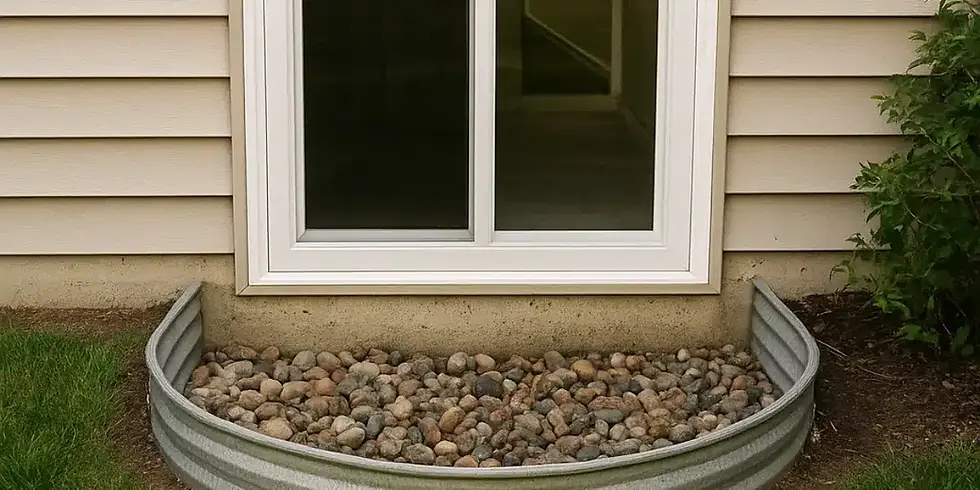
Your basement has no safe exit in a fire, and you already know it. Maybe you have been putting off adding an egress window because you are unsure where to start, or you worry about cutting into a foundation wall and inviting water problems you do not already have. That concern is valid, and it is the exact reason basement egress window installation in PA needs to be approached as both a safety project and a waterproofing project at the same time.
The challenge is that most contractors treat these as separate jobs. In Western PA, that approach leads to leaks, mold, and costly repairs down the road. Homes across Westmoreland and Allegheny Counties face some of the most demanding soil and moisture conditions in the region, which means every penetration in a foundation wall is a potential water entry point. If you are planning a finished basement space or addressing persistent moisture, Basement Waterproofing and egress window installation need to happen as a coordinated plan from day one.
How Western PA's Climate and Soil Complicate Egress Window Projects
Western Pennsylvania sits on dense clay-heavy soil that absorbs water slowly and holds it against foundation walls for days after a rain event. When that soil swells during wet seasons, it pushes moisture into any gap, crack, or unsealed joint it can find, including the perimeter of a newly cut egress window opening.
Older homes in communities like Monroeville, Latrobe, and Export often have block foundations with little or no original drain tile. Block foundations were not designed to handle modern expectations for dry, finished living space, and adding an egress window without addressing drainage around the new opening is a short-term fix that typically creates a long-term water problem. North Huntingdon and Irwin share similar block construction patterns, and contractors familiar with these neighborhoods know how to plan drainage around those foundation types specifically. Understanding this connection is what separates a properly executed installation from one that leaks by the second spring.
What Proper Egress Window Installation Actually Involves
A common misconception is that egress window installation is simply a matter of cutting a hole and dropping in a frame. The actual process is far more involved, and getting each step right is what protects your home for decades.
Here is what a thorough basement egress window installation in PA covers:
Structural assessment of the foundation wall to confirm the opening can be made safely without compromising load-bearing integrity
Excavation of the exterior window well, sized correctly for both code compliance and adequate light
Waterproof membrane application around the rough opening before the window frame is set
Window well drain installation tied into the existing drainage system or a new perimeter drain
Interior and exterior sealing to close every gap between the frame and the foundation wall
Each of these steps connects to your home's overall moisture management. Skipping any one of them is where water problems begin. For a broader look at what a full waterproofing project involves alongside this work, The Process of Basement Waterproofing: What to Expect covers the key stages in detail.
The Connection Between Egress Windows and Foundation Health
Cutting into a foundation wall is one of the most invasive things you can do to a home's structure, which means it is also a prime opportunity to evaluate the foundation itself. During excavation and installation, a qualified contractor can spot early warning signs of Foundation Repair needs, including horizontal cracks, bowing block walls, or crumbling mortar joints.
In Western PA, these issues are often related to the same clay soil conditions that drive water problems. Catching them during an egress window project can save significant money compared to discovering them after water damage has compounded the issue.
Why Window Well Drainage Is Non-Negotiable
Window wells that do not drain properly become catch basins for rainwater and snowmelt. In a region where heavy spring rains and freeze-thaw cycles are part of every calendar year, a poorly drained window well will push water directly through the new opening into your basement. The window well drain must either tie into a sump pump system or connect to a daylight drain with a clear path away from the foundation.
For homes in Greensburg or Murrysville where grade issues are common, a gravel bed alone is rarely sufficient. A perforated pipe drain under the gravel connected to an active sump system is the reliable long-term solution. If you want to understand how sump systems handle that kind of seasonal load, Sump Pump Maintenance Tips for Western Pennsylvania Homeowners is a useful starting point.
Egress Windows and Sump Pump Systems
Installing an egress window on a wall that already takes on groundwater pressure makes sump pump capacity a real consideration. If your existing sump pump was sized for the original basement footprint, adding a new low window and well may require upgrading to a higher-capacity unit or adding a backup system.
Sump pump installation is often recommended alongside egress window work, especially in low-lying areas of Irwin or Trafford where the water table rises seasonally. Addressing both in a single project reduces excavation costs and ensures the systems are designed to work together.
Egress Windows and Building Code Requirements in Pennsylvania
Pennsylvania residential building code requires egress windows in sleeping rooms and in basement spaces used as sleeping areas. The state follows the International Residential Code, which sets the minimum net clear opening at 5.7 square feet, with no single dimension less than 24 inches in height or 20 inches in width. The sill height cannot exceed 44 inches above the finished floor. Local municipalities in Westmoreland and Allegheny Counties, including Greensburg, North Huntingdon, and Monroeville, may have additional requirements administered through their local building departments, so confirming permit specifics with your contractor before work begins is important.
Beyond dimensions, code compliance also covers:
Maximum sill height from the finished floor
Minimum window well dimensions and ladder requirements for deeper wells
Proper permits and inspections before the project is closed out
Working with a contractor who pulls the proper permits protects your home's resale value and keeps your homeowner's insurance valid. If you are curious about what water intrusion through an unprotected opening can cost over time, the Cost of Basement Flood Damage Repair in Greensburg PA is worth reviewing before making any decisions.
Cost and Timeline Considerations for Egress Window Projects
Every egress window project is different. Foundation wall material, soil conditions, window well depth, drainage needs, and code requirements all affect both the timeline and the total investment. Homes with stone or poured concrete foundations require different tools and techniques than those with block construction, and deeper window wells demand more excavation time and material.
Most residential egress window installations in Western PA fall in the range of $2,500 to $6,500 depending on those variables. That range does not include additional waterproofing or sump upgrades, which are often recommended as part of the same project. A properly scoped installation typically completes in one to three days, with drainage and finishing work adding time depending on complexity. For an accurate quote specific to your home's conditions, the best step is a professional site assessment.
People Also Ask
Do egress windows cause water problems in basements?
They can if the installation is not handled with proper waterproofing measures. The opening and window well must include waterproof membranes, sealed frames, and a working drainage system. When those components are properly integrated, an egress window does not increase your basement's moisture risk.
How long does egress window installation take?
Most residential egress window installations take one to three days from excavation through finishing, depending on foundation type, soil conditions, and whether drainage upgrades are needed. Homes with more complex waterproofing requirements or permit timelines may take longer from project start to final inspection.
Is a permit required for egress window installation in Pennsylvania?
Yes, a building permit is required in Pennsylvania for egress window installation because it involves structural modification of the foundation wall. Your contractor should handle the permit application, and the finished work must pass a local building inspection before the project is officially complete.
What size does a basement egress window need to be in PA?
Pennsylvania follows the International Residential Code, which requires a minimum net clear opening of 5.7 square feet, with no dimension less than 24 inches in height or 20 inches in width. The sill height must be no more than 44 inches above the finished floor, and local municipalities may have additional requirements.
FAQ
Will adding an egress window affect my foundation's structural integrity?
A properly installed egress window does not compromise your foundation when the opening is assessed and framed correctly. A qualified contractor evaluates load paths before cutting and installs a properly sized lintel to carry the load around the new opening. Skipping this step is what creates structural problems.
Can I install an egress window myself to save money?
Technically possible in some cases, but not recommended for most homeowners. Between structural assessment, waterproofing integration, permit requirements, and drainage system coordination, the installation involves several interdependent systems. Errors in any one area can result in water intrusion, failed inspections, or foundation damage that costs far more to correct than the original savings.
What is the best type of egress window for a wet basement environment?
Vinyl-framed windows are typically preferred in below-grade applications because they do not rot or corrode with consistent moisture exposure. The window itself matters less than the installation method. Even a high-quality window will leak if the surrounding waterproofing and drainage are not executed correctly.
Should I waterproof my basement before or after egress window installation?
Ideally both happen together as part of a coordinated project. If an interior drainage system is being installed, it should be planned around the new window well drain location. Doing them separately often means disrupting finished work and spending more in the long run.
Protect Your Home with Trusted Local Expertise
Since 1996, A Better Choice, Inc. has helped Western PA homeowners protect their most valuable investment with proven basement waterproofing and foundation solutions built for the region's specific conditions. Our team has completed installations throughout North Huntingdon, Irwin, Greensburg, Monroeville, Latrobe, Export, and the broader Westmoreland and Allegheny County area, working with the soil types, foundation styles, and municipal permit processes that are specific to each community. That local experience is what makes the difference between an installation that holds up and one that creates new problems.
If you are ready to add an egress window or want a professional assessment of your basement's waterproofing before the project begins, now is the right time to act. Waiting through another wet season only adds moisture exposure to an already-vulnerable space.
Visit A Better Choice, Inc. or call 1-800-343-2357 today. Our team brings nearly three decades of Western PA basement expertise to every project, so you get safety, waterproofing, and code compliance handled right the first time. Contact us for more information.


Comments