
Where Should Your Sump Pump Discharge in Allegheny and Westmoreland County?

A sump pump discharge line should carry water away from your foundation and onto your own property, into a storm sewer, or into an approved outlet, and never into the sanitary sewer that carries sewage. The Allegheny County plumbing code (Article XV, Chapter 11) states that "storm water shall not be drained into sewers intended for sewage only," and 3 Rivers Wet Weather lists groundwater sump pumps among the improper connections homeowners must fix. For distance, the U.S. Department of Energy's Building America Solution Center says downspouts should discharge at least 5 feet from the foundation, or at least 10 feet away if piped underground, a useful benchmark for sump water too.
In part of Westmoreland County, this can come up when you sell your house. The Western Westmoreland Municipal Authority, which serves Irwin, Manor, North Irwin, and parts of North Huntingdon, Penn, and Hempfield townships, requires buildings to be dye tested before they are sold, checking downspouts, area drains, foundation drains, and sanitary laterals, and any stormwater or extraneous flow found "shall be remedied before the sale of the property is finalized." This guide covers where the line can go, what county and local rules say, how to keep water off sidewalks and neighbors' yards, and who to ask in your town.
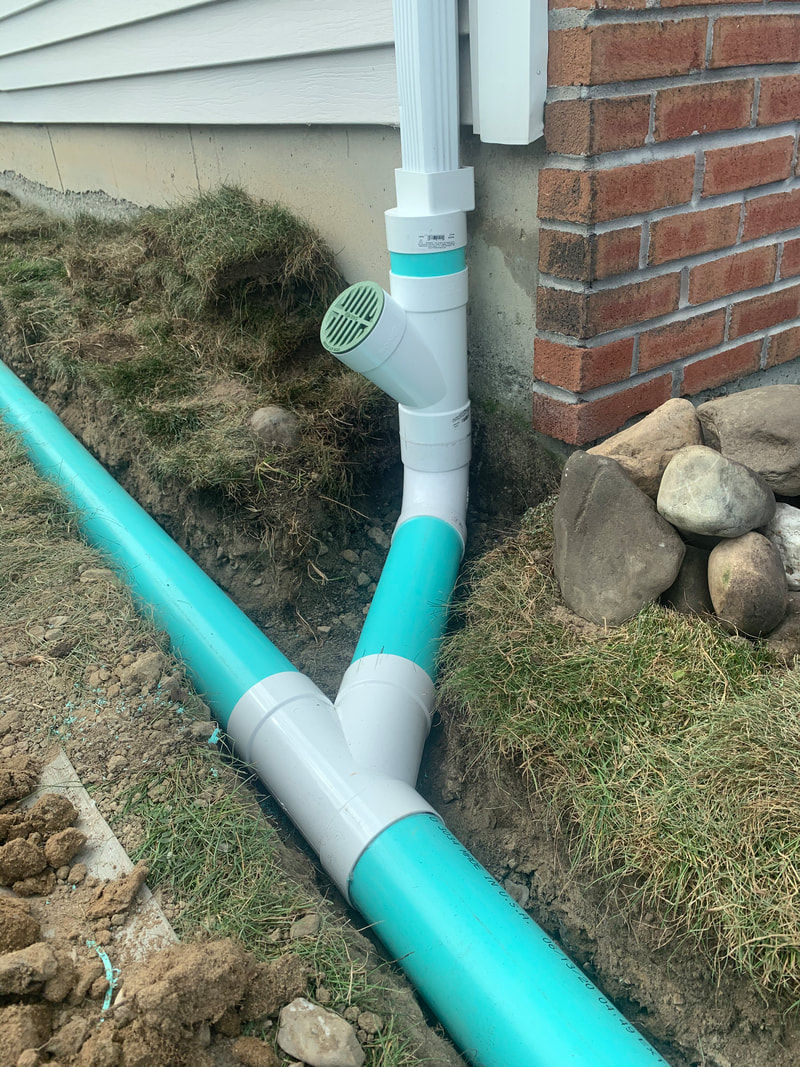
Where should a sump pump discharge line go?
A sump pump discharge line is the pipe that carries water from the sump pit, out through the wall, and away from the house. Its job is to drop that water somewhere it will not soak back toward the foundation and end up in the pit again.
3 Rivers Wet Weather lists acceptable destinations for disconnected stormwater: onto the ground, into a drainage ditch, into the storm sewer line, or into green infrastructure such as a rain barrel or rain garden. Mt. Lebanon's sump pump guidance says tying into a municipal storm sewer is preferred where one is available.
When the water goes onto the lawn, distance and slope matter. The DOE Building America Solution Center recommends that the ground fall at least half an inch per foot for the first 10 feet away from the house. Water released on a flat or back-sloped yard can find its way back to the foundation. Our post on preventing water from pooling in your yard covers grading problems in more detail.
Can a sump pump discharge into the sanitary sewer?
In most separate sewer areas, no. A sanitary sewer is built to carry wastewater from toilets, sinks, and drains to a treatment plant, not groundwater or rain.
Several local rules say this directly:
Allegheny County Article XV: "Storm water shall not be drained into sewers intended for sewage only."
3 Rivers Wet Weather: "It is the homeowner's responsibility to fix any improper connections to the sanitary sewer line such as downspouts, driveway drains and groundwater sump pumps."
Western Westmoreland Municipal Authority: no one connected to a sanitary sewer may connect "any roof drain, foundation drain, area drain or any other stormwater conveyance," or let in "spring (ground) water."
North Huntingdon Township, Chapter 440: "The discharge of stormwater runoff or other surface water into the sewerage system is hereby prohibited."
Why clean water in the sewer causes problems
ALCOSAN, which treats wastewater from 83 municipalities, lists sump pumps, downspouts, and foundation drains among the direct connections that send inflow into sanitary sewers, and notes that inflow "typically occurs shortly after a rainfall starts." Pittsburgh Water says that when combined sewer pipes are overwhelmed, "combined sewage and stormwater can also back up into basements."
What about combined sewers in Pittsburgh?
Combined sewers change the picture, so check before you assume either way. ALCOSAN explains that older communities have combined systems that carry sewage and stormwater in the same pipe, while separate systems have been built since the 1940s. Pittsburgh Water says about 75 percent of Pittsburgh is served by combined sewers.
According to 3 Rivers Wet Weather's summary of Allegheny County Article XV, Section 1101, storm drainage is to go to "a separate storm sewer system, or a combined sewer system" where available, or to green stormwater practices that meet Pennsylvania DEP guidelines. The Western Westmoreland Municipal Authority's rules also note that Irwin and Manor Borough own facilities permitted to carry combined flows. Whether your particular property may connect to a combined line depends on your municipality, your sewer authority, and the Allegheny County Health Department's plumbing permit process, so ask them before any pipe work is done.
Can you run the discharge onto the sidewalk, street, or your neighbor's yard?
No, in Allegheny County, that is off-limits under the plumbing code. 3 Rivers Wet Weather quotes Article XV: "In no case shall collected surface or storm water be allowed to drain over sidewalks or driveways, or onto adjacent properties where the water can create soil erosion or have adverse effects on a structure."
Municipalities can add their own limits. Mt. Lebanon, for example, says sump water "cannot be discharged to a public way (ie: street or sidewalk) or directed at, or negatively affect a neighboring property," and requires the discharge to be at least 10 feet from any property line. Mt. Lebanon also asks for construction details and a property survey showing the discharge location when a permit is required. Your borough or township may have different numbers, so treat these as examples, not rules for your street.
Winter gives you one more reason to keep water off walkways. NOAA's 1991 to 2020 normals for Pittsburgh International Airport show a January mean temperature of 28.8 F and 44.1 inches of snow a year.
Can your house fail a sewer inspection because of a sump pump?
It can, depending on where you live. Several authorities in the region test for illegal connections:
The Western Westmoreland Municipal Authority requires dye testing of stormwater conveyances, downspouts, area drains, foundation drains, and sanitary laterals before a property is sold.
The Municipal Authority of Westmoreland County (MAWC) says it finds illegal connections through smoke and dye testing and sends a Notice of Violation requiring the problem to be corrected. MAWC also notes that sewer cleanouts with broken caps can act as area drains and let stormwater in.
If you are buying or selling in Irwin, North Huntingdon, Greensburg, or elsewhere in Westmoreland County, ask your sewer authority early whether a test is required and how long it takes. A sump line piped into a floor drain or laundry tub sends groundwater toward the sanitary sewer, which WWMA's rules prohibit.
How do you find the rules for your borough or township?
Start with the sewer bill. The name on it tells you who runs your sewer: a borough, a township, a municipal authority such as WWMA or MAWC, or the City of Pittsburgh through Pittsburgh Water. That office can tell you:
Whether your street has separate or combined sewers
Whether a storm sewer connection is available and needs a permit
Setbacks from property lines or sidewalks
Whether a dye test is required at sale
In Allegheny County, plumbing permits also run through the Allegheny County Health Department, which enforces Article XV. 3 Rivers Wet Weather recommends contacting a licensed plumber to correct an improper sewer connection.
For work on the pump side, our guide to sump pump installation in Irwin and Greensburg explains what to expect, and sump pump maintenance tips for Western Pennsylvania covers keeping the line clear.
FAQ
Where should sump pump discharge go?
Onto your own property well away from the foundation, into a storm sewer, or into an approved outlet such as a rain garden. For downspouts, the DOE Building America Solution Center uses at least 5 feet from the foundation above ground, or 10 feet if piped underground, which is a reasonable starting point for sump water.
Is it illegal to connect a sump pump to the sewer in Allegheny County?
Allegheny County's plumbing code says stormwater shall not be drained into sewers intended for sewage only, and 3 Rivers Wet Weather treats a groundwater sump pump tied to the sanitary line as an improper connection. Rules for combined sewer areas differ, so confirm with your municipality and the Allegheny County Health Department.
Can I drain my sump pump into a floor drain or laundry sink?
Those drains usually lead to the sanitary sewer, so the same rules apply. Ask your sewer authority before using one as an outlet.
Can a sump pump discharge onto my driveway?
Not under Allegheny County Article XV, which says collected surface or storm water may not drain over sidewalks or driveways or onto adjacent properties where it can cause erosion or harm a structure.
How far from the property line should a sump pump discharge?
It depends on your municipality. Mt. Lebanon, for example, requires at least 10 feet from any property line.
Why is my sump pump running constantly?
A pump that never seems to stop has several possible causes. Our troubleshooting guide for a sump pump that runs constantly walks through the causes.
A Better Choice, Inc. helps keep water away from your basement
A Better Choice, Inc. has worked on wet basements in the Greater Pittsburgh area since 1996 and serves homeowners across Westmoreland and Allegheny counties, including Irwin, North Huntingdon, Greensburg, Monroeville, and Pittsburgh. If your sump pump runs often or water keeps returning to the pit, our basement waterproofing team can look at where the water is coming from during a free inspection. Homeowners near Greensburg can also visit our Greensburg basement waterproofing page.
Visit A Better Choice, Inc. or call 1-800-343-2357 today. Contact us for more information.


Comments