
Why Are My Basement Walls Crumbling?

Crumbling basement walls are a sign that water is moving through the masonry and damaging it on the way. The National Park Service's glossary of masonry deterioration names the two main causes of spalling as "pressure of salts and freeze-thaw cycles of moisture trapped under the surface," and both start with water moving through the wall. Old mortar washing out and parging that has lost its grip add to the sand and chips you sweep up along the floor.
The white fuzz you can see is not the part doing the most damage. NPS Preservation Brief 2 explains that as moisture evaporates from masonry, it deposits soluble salts "either on the surface as efflorescence or below the surface as subflorescence," and that "salt crystallization within a masonry unit creates pressure that can cause parts of the outer surface to spall off or delaminate." The hidden salts under the face push it off from behind. This post covers each cause, how to tell cosmetic crumbling from structural trouble, and repair steps that do not make the problem worse.

What does spalling on a basement wall mean?
Spalling is the breaking away of a masonry surface in chips, flakes, or layers. The NPS glossary describes it as the outer layer or layers beginning to "break off (unevenly), or peel away in parallel layers from the larger block of masonry." On a basement wall, spalling looks like a block face that sounds hollow when tapped, flat flakes on the floor, or a patch of wall that has lost its smooth skin and now shows rough aggregate.
Crumbling is the looser, sandier version. The same NPS glossary describes disintegration as a tendency of the masonry "to break up or dissolve." A wall can show both at once, with sandy mortar joints between blocks whose faces are flaking.
How do salts push the face off a basement wall?
Groundwater and soil moisture carry dissolved salts. When that water moves through a block, brick, stone, or concrete wall and evaporates on the basement side, the salts are left behind.
If the water evaporates right at the surface, you get efflorescence, the white powder or crust most people notice first. The NPS glossary calls it a "whitish haze of soluble salts" on masonry. It can be brushed off, and our guide to efflorescence on basement walls covers what it tells you about moisture.
If the water evaporates just below the surface, the salts crystallize inside the pores instead. The NPS glossary defines subflorescence as a "hidden build-up of soluble salts deposited under or just beneath the masonry surface," and Preservation Brief 2 says that crystal growth creates enough pressure to spall off the outer surface. Every wet and dry cycle adds more salt, which helps explain why spalling can keep spreading from the same damp zone.
Two practical signs point to salts as the cause. The damage lines up with the wettest part of the wall, and white residue shows up on the flakes or in the gaps behind them.
Can freeze-thaw cycles make basement walls crumble?
Yes, where water in the wall actually freezes. A Federal Highway Administration research report on concrete durability states that "water expands in volume by approximately 9 percent when it freezes," and that concrete is damaged by freezing when the capillaries in the cement paste are "more than 91.7 percent full of water." A drywall has room to absorb that expansion. A saturated one does not.
Freezing needs cold, so look closely at the top of the wall near grade, any section above the soil line, and walls beside an unheated garage or crawl space. NOAA's 1991 to 2020 normals for Pittsburgh International Airport put the January mean temperature at 28.8 F, a mean below freezing, so masonry near the surface in Westmoreland and Allegheny counties sees real winter freezing. Our posts on why Pittsburgh basements crack every winter and exterior cracks after freeze-thaw cycles go deeper on the seasonal side.
Why is the mortar between blocks turning to sand?
Mortar is supposed to be the softer, more porous part of a masonry wall; NPS Preservation Brief 2 calls for repair mortar that is softer and more vapor permeable than the masonry units. That also makes joints an easy path for water, salts, and frost. NPS Preservation Brief 2 lists the usual signs that repointing is needed: "disintegrating mortar, cracks in mortar joints, loose bricks or stones, damp walls, or damaged plasterwork."
In block walls, sandy joints near the floor or near grade often line up with where water enters. Either way, the brief is clear on order of work: the root cause of the deterioration "should always be dealt with prior to beginning work," because without fixing the source, "mortar deterioration will continue."
Why is parging falling off basement walls?
Parging is a thin coat of mortar over a masonry wall. The U.S. Department of Energy's Building America Solution Center defines it as "a mortar applied to the surface of a masonry wall to create a smooth, continuous surface free of holes," and notes that concrete products "are porous and, unless treated, are not waterproof."
That porosity explains most parging failures on basement walls. A parge coat changes how the wall looks, not where the water comes from. If the block behind it stays damp, the same salt crystallization and freezing the NPS describes keep acting right at the bond between the old wall and the new coat, and the parging lets go in sheets.
Hardness matters too. NPS Preservation Brief 2 says repair mortar "must have greater vapor permeability and be softer (measured in compressive strength) than the masonry units," and warns that mortar stronger than the masonry "will not 'give,'" so stresses go into the bricks or stones instead, "resulting in permanent damage." Parging or repointing an old stone or brick foundation with a hard, dense cement mix can trade a crumbling joint for a cracked face.
Is a crumbling basement wall cosmetic or structural?
Surface loss on its own is usually a moisture and maintenance issue. Movement is what makes it structural.
Treat the wall as structural, and get it inspected, if you see:
Blocks or stones that are loose, rock when pushed, or have fallen out
A horizontal crack, or a wall that bows or leans inward
Crumbling deep enough that you can see into the hollow cores of block
Stair-step cracking that is growing or offset
InterNACHI, the home inspector association, describes how moisture-saturated soil pushing on the outside of a foundation can make the wall "bend inward, creating a crack and opening in the foundation wall." Our posts on hydrostatic pressure and bowed basement walls in old homes explain those forces. A weakened, crumbling wall has less material left to resist them.
How do you fix crumbling basement walls?
Work from the outside in, in this order.
1. Stop the water first
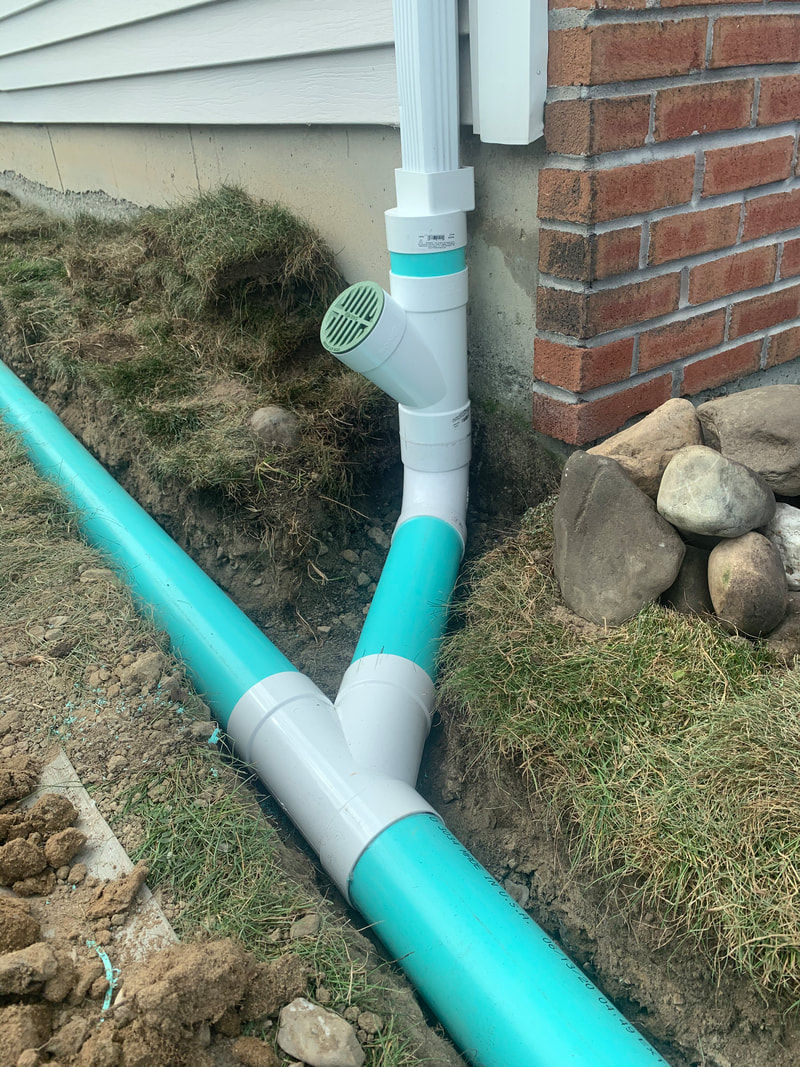
Every mechanism above needs water, so reduce how much reaches the wall. The Building America Solution Center recommends that downspouts discharge at least 5 feet from the foundation, or underground at least 10 feet away, and that the ground slope away at least half an inch per foot for the first 10 feet. Where outside water is still getting through, basement waterproofing deals with the water side of the problem.
2. Clean off what is loose
Remove flaking material and loose mortar down to sound masonry, and brush away efflorescence so you can see whether it returns.
3. Repoint and parge with compatible materials
Match the repair mortar to the wall. Per NPS Preservation Brief 2, new mortar should be softer and more vapor permeable than the masonry units, which matters most in stone and brick foundations.
4. Repair the structure if it has moved
Bowing, leaning, or loose sections need foundation repair, not a new surface coat.
FAQ
Is crumbling concrete in a basement dangerous?
Surface flaking signals ongoing moisture and loss of material. Loose blocks, bowing, or horizontal cracks are signs that call for an inspection soon.
Can I just parge over spalling basement walls?
You can, but if the wall stays wet, salts and frost will keep working behind the new coat. Fix the water source first, then parge with a mortar suited to the wall.
What is the white powder on my crumbling wall?
It is most likely efflorescence, soluble salts left behind when water evaporates from the masonry. The NPS describes the same salts crystallizing just under the surface as subflorescence, which is what pushes flakes off.
Should I seal or paint a crumbling basement wall?
Coating a wall does not stop water from entering it from the soil side. Deal with drainage and water entry first, and ask whoever inspects the wall whether a coating suits that wall material.
What mortar should be used to repoint an old stone foundation?
NPS Preservation Brief 2 says new mortar should be as vapor permeable and as soft or softer than the historic mortar, and softer than the stones or bricks themselves, so the repair does not damage the masonry.
Does homeowners insurance cover crumbling basement walls?
Coverage depends on the policy and the cause of damage. The Pennsylvania Insurance Department notes that flood is not covered by standard homeowners policies, so check your own policy with your insurer.
Help for a crumbling foundation wall near Pittsburgh
A Better Choice, Inc. has worked on homes across the Greater Pittsburgh area since 1996 and has served over 26,000 satisfied customers in Westmoreland, Allegheny, Butler, and neighboring counties. The family- and veteran-owned company fixes wet basements and reinforces structures, and a free inspection is the place to learn whether your wall needs water control, masonry repair, or structural support.
Visit A Better Choice, Inc. or call 1-800-343-2357 today. Contact us for more information.



Comments